

- Home
- Sustainability
- Climate Change (Disclosure Based on TCFD Framework)
Environmental Measures
- Environmental Philosophy and Basic Policy
- Environmental Management
- Climate Change (Disclosure Based on TCFD Framework)
- Resource Recycling
- Pollution Prevention
- Water Resource Conservation
- Chemical Substances Management
- Environmentally Friendly Products
Climate Change (Disclosure Based on TCFD Framework)
Addressing climate change is essential to realizing a sustainable society and is also a prerequisite for the business continuity of the Dexerials Group. With the aim of contributing to the achievement of carbon neutrality by 2050, the Group is working to reduce CO2 emissions throughout the supply chain, while appropriately identifying risks and opportunities to enhance long-term corporate value.
Information Disclosure Based on TCFD Disclosure Framework
The Dexerials Group declared its support for the recommendations of the Task Force on Climate-related Financial Disclosures (TCFD) in September 2021, and we are working to identify the management risks and opportunities posed by climate change in a timely and appropriate manner, while also working to implement highly effective activities to help realize a sustainable society. We will promote initiatives to provide new value through our unique products and technologies and leave a rich environment to future generations, while pursuing collaboration with our stakeholders. In line with this basic approach, we will achieve long-term enhancement of corporate value through highly transparent information disclosure and initiatives to address climate change.
Strategy
To contribute to the realization of a carbon-neutral society by 2050, the Dexerials Group will steadily reduce CO2 emissions (Scope 1 and 2) and will also actively work to reduce CO2 emissions throughout the supply chain, including Scope 3. We will also work to improve both energy efficiency and productivity by converting our manufacturing sites, including the newly expanded Kanuma Plant No. 2, into smart factories and by reducing energy consumption throughout our sites, thereby contributing to the decarbonization of society.
To achieve these goals, we aim to reduce CO2 emissions (Scope 1 and 2) by 38% compared with fiscal 2019 by fiscal 2028, and to set a reduction target for Scope 3 emissions and implement reduction measures.
Moreover, to identify risks and opportunities associated with climate change from a long-term perspective up to 2050, the Dexerials Group is performing analyses taking into account two scenarios: a less than 2°C scenario and a 4°C scenario. Accordingly, we are sequentially expanding the scope of business units subject to scenario analysis, assessing impacts on business, and discussing countermeasures.
1) Scope of Products Subject to Scenario Analysis
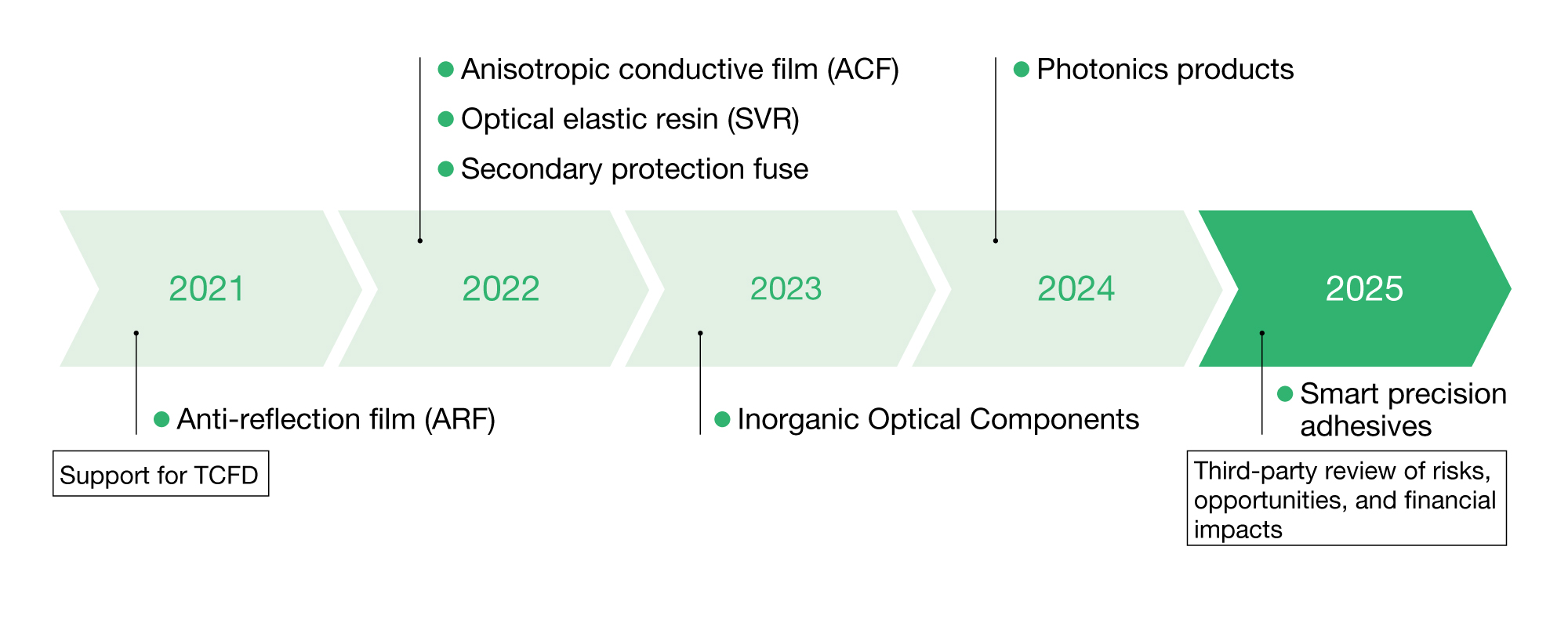
Since fiscal 2021, the Dexerials Group has conducted scenario analyses prioritizing mainstay products with a significant impact on CO2 emissions. In fiscal 2025, we newly included smart precision adhesives in the scope of analysis, thereby completing the scenario analysis for seven business categories*1 corresponding to the Group’s main products.
- *1Seven business categories: Anti-reflection film (ARF), Anisotropic conductive film (ACF), Optical elastic resin (SVR), Secondary protection fuse, Inorganic optical components, photonics products, smart precision adhesives. These business categories account for approximately 87% of net sales.
Status of Initiatives (FY)
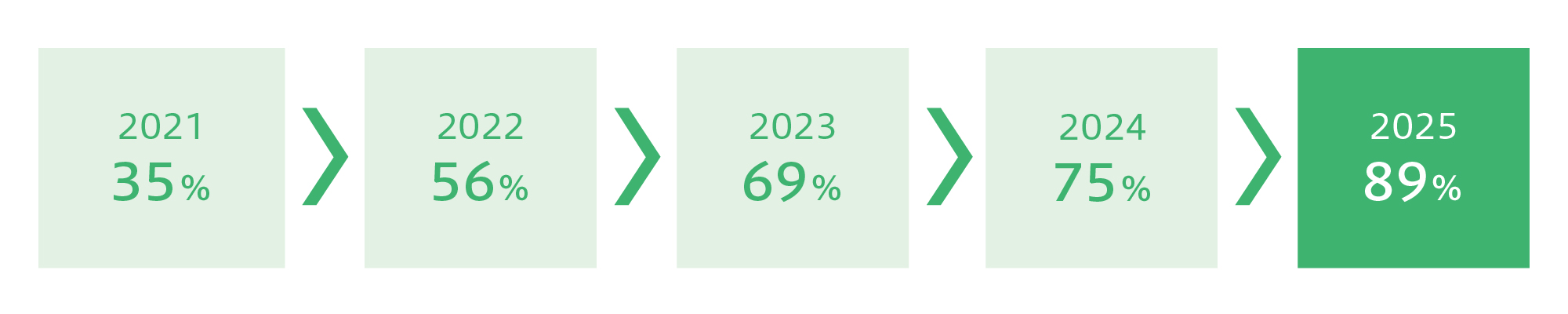
CO2 Emissions (Scope 1 + 2) Coverage Rate (Consolidated) (FY)
2) Setting of Scenarios
Having considered the impact on the Dexerials Group based on future scenarios presented by the Intergovernmental Panel on Climate Change (IPCC) and the International Energy Agency (IEA), we estimated financial impacts and considered initiatives to address transition risks and opportunities.
| Scenarios | Overview | Reference Scenario |
|---|---|---|
| Less than 2°C scenario |
As a result of our carbon-neutral efforts, the average temperature rises by less than 2°C by the end of this century compared with pre-Industrial Revolution levels. Movements toward the realization of a decarbonized society and a recycling-oriented society are accelerating. |
|
| 4°C scenario |
With only limited progress in carbon-neutral efforts, the average temperature rises 2°C or more by the end of this century compared with pre-Industrial Revolution levels. |
|
3) Results of Financial Impact Estimation
Taking into account the link with our growth strategies for fiscal 2025, we analyzed the financial impact based on the TCFD recommendations over the following three time frames.
・ Short term: Fiscal 2028 (final year of the current Mid-Term Management Plan)
・ Medium term: Fiscal 2030 (climate change mid-term target year)
・ Long term: Fiscal 2033 (final year of next Mid-Term Management Plan [assumed])
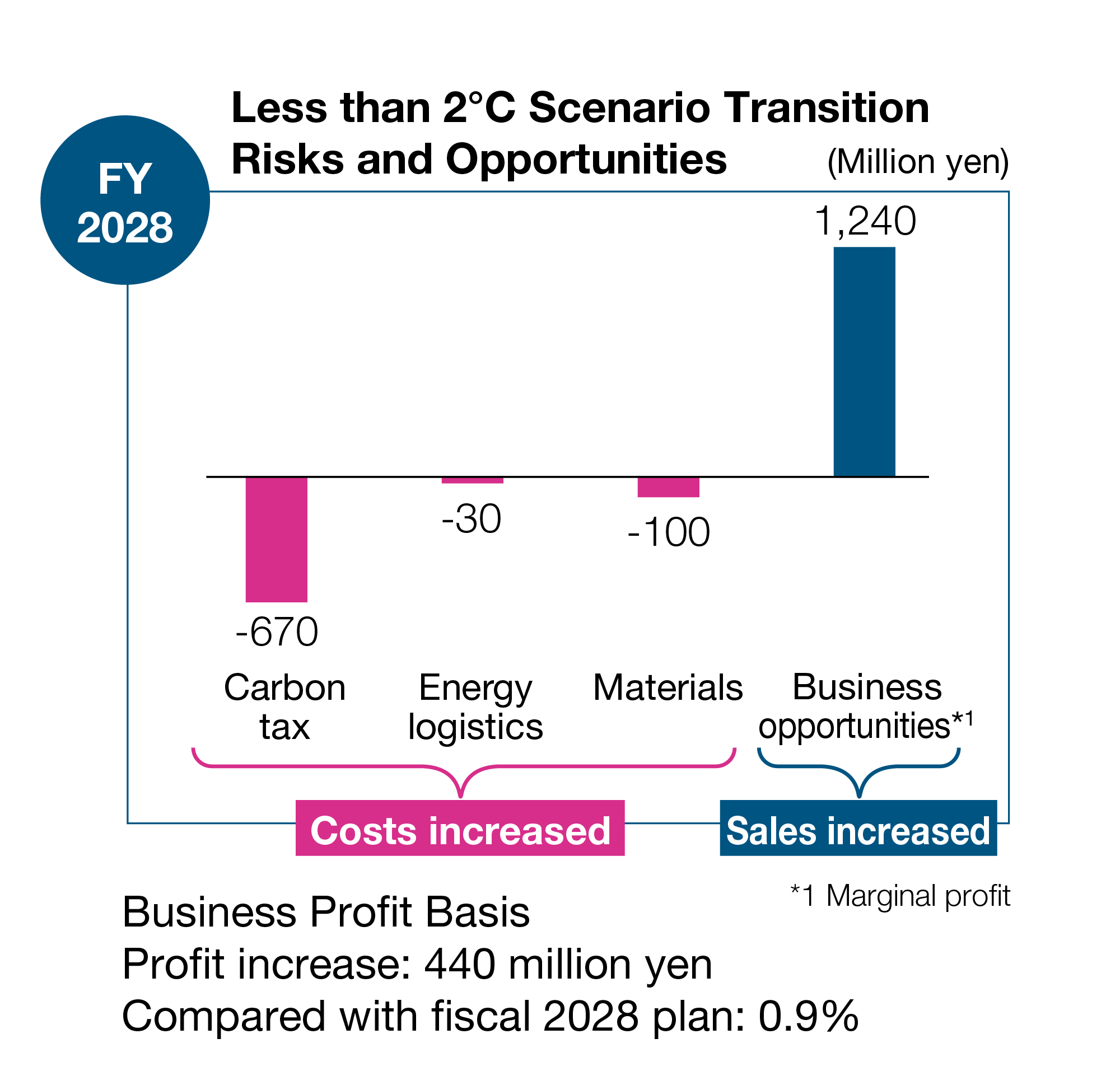
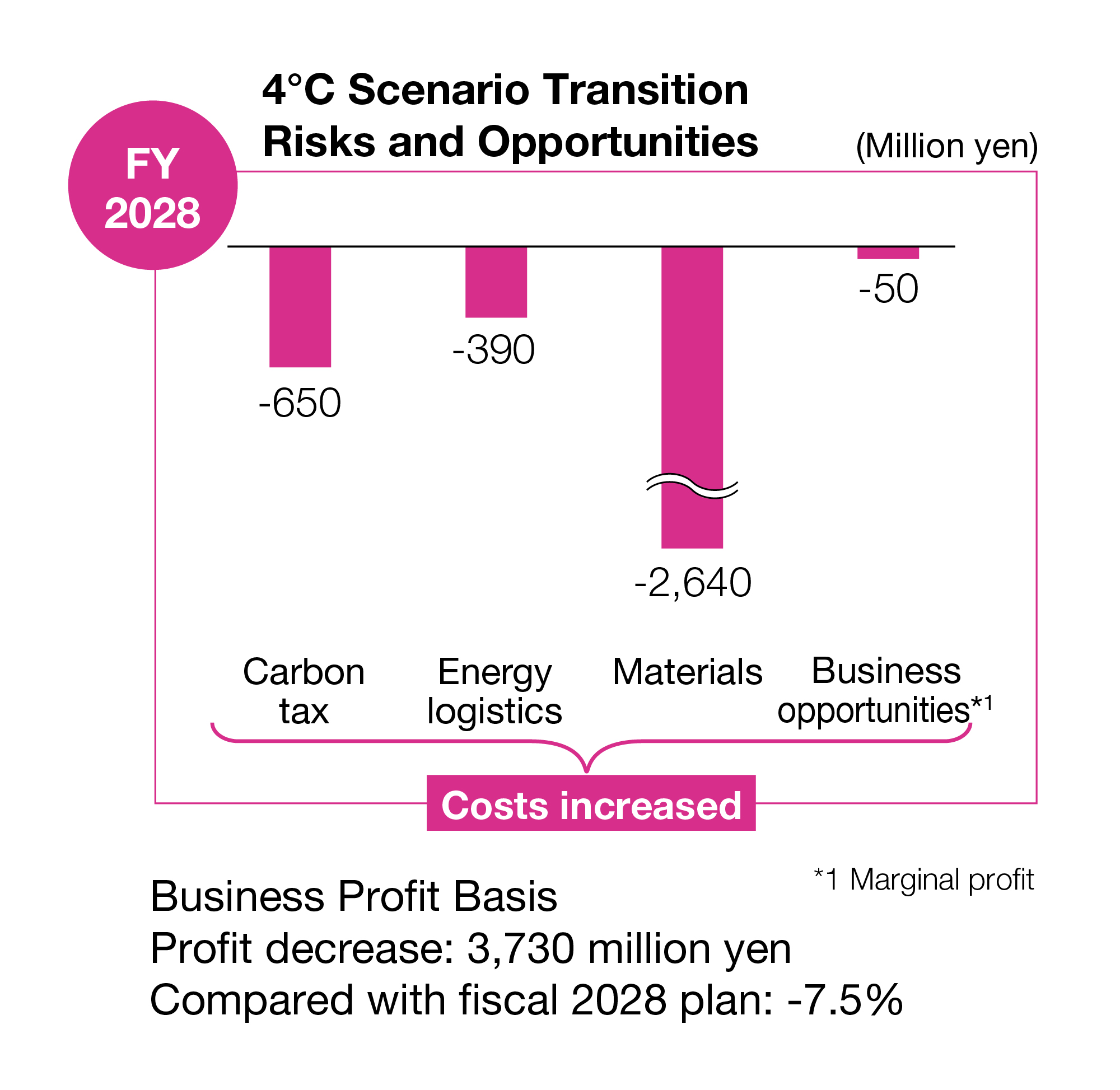
Focusing on the short-term financial impact in fiscal year 2028, the main impacts and their contributing factors are summarized in the diagram below.
4) Results of Financial Impact Estimation Based on the Less than 2°C Scenario
A 0.9% increase in profit compared with the Mid-Term Management Plan is expected. Although a 0.7% decrease in profit was expected according to the estimation in fiscal 2023, we have revised the financial impact to reflect the latest forecasts of international organizations and progress in business activities. The main factors contributing to the increase in profit are as follows:
・ Review of material costs: The supply of materials such as rare metals is expected to increase, mitigating the risk of rising unit prices*2
・ Expansion of business opportunities: Expanding the scope of environmentally friendly materials, an increase in profit due to enhanced product value is reflected in the estimation.
On the other hand, the main factor contributing to transition risk in this estimation is the increase in business operating costs due to the introduction of a carbon tax (an issue common to all seven business categories).
We also analyzed international climate change scenarios and industry trends (risks and opportunities as perceived by customers) and organized transition opportunities based on third-party advice. As a result of this review, we identified the following opportunities:
・ Growing demand for EVs and products that contribute to expansion of EV production*3
・ Increase in added value of products and sales increase through environmental considerations
In addition, the Dexerials Group’s photonics technology is expected to contribute to reducing power consumption in data centers. We are currently investigating the consistency with future scenarios presented by international organizations. Once this is confirmed, we will consider reflecting the sales opportunity for this technology as a “transition opportunity” in the financial impact estimation.
We will continue conducting cross-functional discussions with the Group’s production and business units to develop measures that address these transition risks and opportunities, and we plan to link these discussions to future initiatives.
- *2Based on future projections by the International Energy Agency and other sources, examined by our company
- *3Anti-reflection film (ARF), Secondary protection fuse, Photonics-related products
5) Results of Financial Impact Estimation Based on the 4°C Scenario
Business profit under the Mid-Term Management Plan is expected to decrease by 7.5% compared with the planned figure. Although a 7.9% decrease in profit was expected according to the estimation in fiscal 2023, we have revised the financial impact to reflect the latest forecasts of international organizations and business activities. The main changes are as follows:
・ Review of carbon tax rate: The carbon tax rate is expected to rise further.
・ Review of material costs: The supply of materials, including rare metals, is expected to increase, mitigating the risk of rising unit prices*2.
Regarding business opportunities, while we anticipate a decline in sales opportunities for EV-related products due to the slower-than-expected adoption of EVs, we believe the impact on areas involving Dexerials products—such as the ongoing growth of the size of automotive displays and the advancement of autonomous driving technologies—will be limited.
Regarding physical risks, we focused on the risk of flooding resulting from increasingly severe weather events. Based on hazard maps, the expected damage from flooding was estimated to be approximately 520 million yen. Including the impact of physical risks, business profit under the Mid-Term Management Plan is expected to decrease by 8.5% compared with the planned figure.
- *2Based on future projections by the International Energy Agency and other sources, examined by our company
6) Climate-related Risks/Opportunities and Main Initiatives
The risks and opportunities identified have been organized from the perspective of changes in society, such as climate change, regulatory changes, and technological innovation, and countermeasures for each are being considered as follows. The importance of each issue is assessed based on two axes: “degree of impact” and “likelihood of occurrence.” Those recognized as particularly significant are reflected in the Mid-Term Management Plan and are subject to further review.
| Classification | Climate Change Risks/Opportunities | Impact on Business | Period of Impact*4 | Financial Impact*5 | Response Policies and Countermeasures | |
|---|---|---|---|---|---|---|
| Transition risks (less than 2°C) |
Policies & legal restrictions | Rise in carbon tax due to introduction of carbon pricing |
|
Short to long term | Small |
|
| Tightening of regulations on reduction of greenhouse gas (GHG) emissions |
|
Short to long term | Medium | |||
| Technologies | Technological progress toward a decarbonized, circular society |
|
Short to long term | Small–Medium |
|
|
| Reputation | Changes in consumer thinking and customer policies |
|
|
|||
| Transition opportunities (less than 2°C) |
Policies & legal restrictions | Tightening of regulations on reduction of GHG emissions |
|
Short to long term | Small |
|
| Small–Large |
|
|||||
| Technologies | Technological progress toward a decarbonized, circular society |
|
Short to long term | Small–Medium |
|
|
| Physical changes (4°C) |
Acute | Increasing severity of climate disasters |
|
Short to long term | Small |
|
| Chronic | Rise in average temperatures due to global warming |
|
Short to long term | Small |
|
|
- *4Periods: Short term: FY2028 (final year of the new Mid-Term Management Plan), Medium term: FY2030 (climate change mid-term target year), Long term: FY2033 (final year of the next Mid-Term Management Plan [assumed])
- *5Financial impacts: Small: Under 1.0 billion yen, Medium: More than 1.0 billion yen, Large: More than 4.0 billion yen
- *6FEMS: Factory Energy Management System
 Climate-related Risks Opportunities and Main Initiatives(PDF)
Metrics and Targets (Transition Plan)
The Dexerials Group is working to achieve the CO2 emissions reduction targets it established in fiscal 2024 in line with international climate change standards. According to the IPCC’s Sixth Assessment Report (AR6), to limit global warming to 1.5°C, greenhouse gas (GHG) emissions must be reduced by approximately 43% by 2030 compared with 2019 levels globally. This scientific finding is consistent with the Paris Agreement and the international orientation outlined at COP28.
In light of scientific knowledge, the Dexerials Group is committed to international frameworks and has set the following medium- to long-term CO2 emissions reduction targets.
Medium- to Long-Term CO2 Reduction Targets
● Scope 1 and 2: 46% reduction by end-fiscal 2030 compared with fiscal 2019 levels
● Scope 2: Achieve zero emissions by end-fiscal 2030
Currently, in line with the expansion of the Kanuma Plant No. 2, we are working to automate and streamline production processes through the establishment of a smart factory, and construction work has already begun. Additionally, we are considering transition to low-carbon fuels and also preparing to introduce cogeneration systems, taking business continuity plan (BCP) into consideration.
Furthermore, in light of the goal of “carbon neutrality by 2050” set forth in international frameworks such as the Paris Agreement, we are working to steadily implement a transition plan that is consistent with this goal and to strengthen the promotion system to achieve our targets.
Transition Plan for Carbon Neutrality by 2050 GHG emissions (Scope 1 and 2)*7
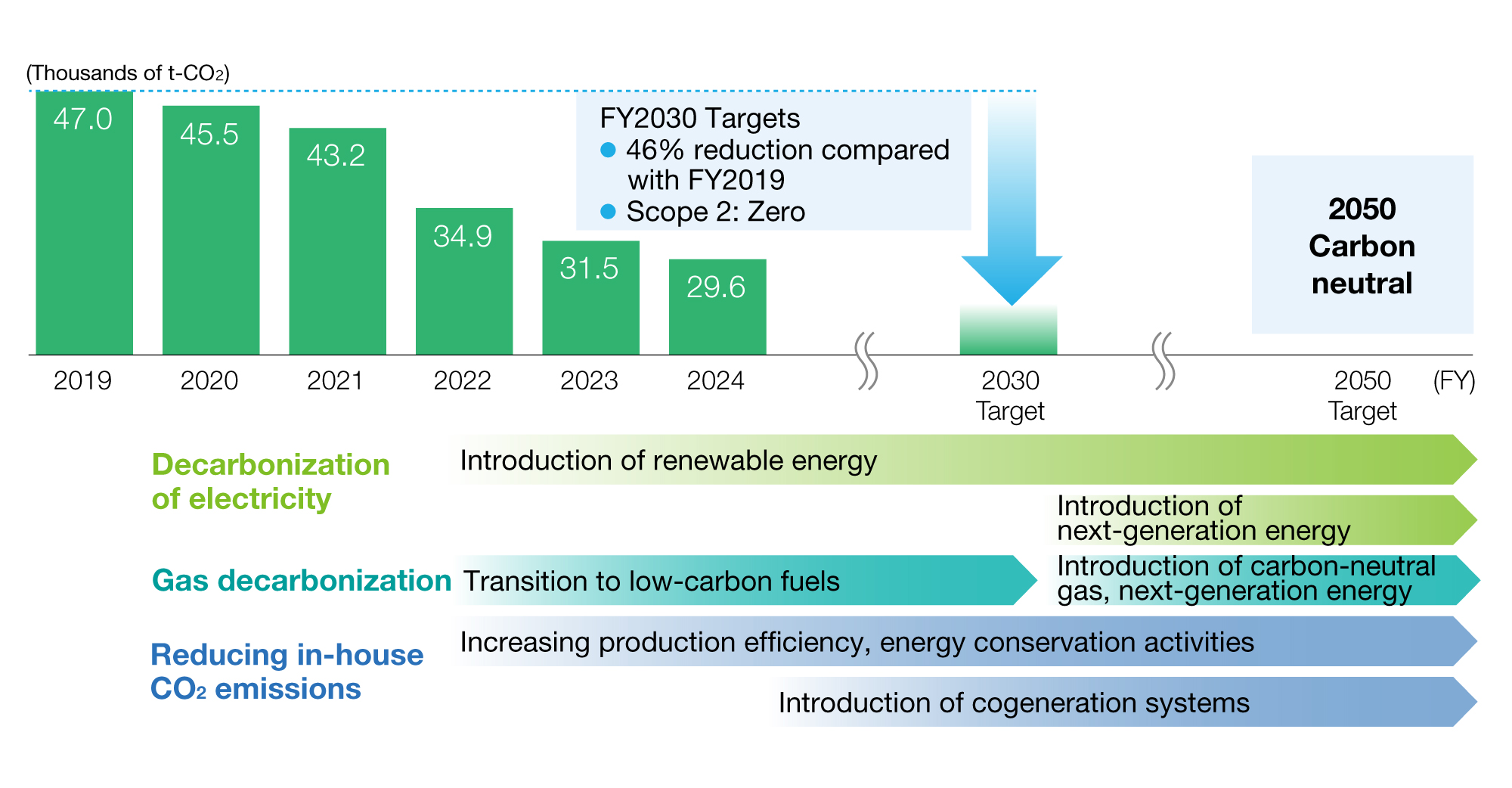
- *7GHG emissions from sales sites outside Japan were calculated in fiscal 2024, and past emissions were also recalculated.
Initiatives for CO2 Emissions (Scope 1, 2, 3)
The Dexerials Group regards the reduction of greenhouse gas emissions from its business activities to be one of its most important management priorities. In addition to reducing its own Scope 1 and 2 emissions, the Group is working to identify and reduce Scope 3 emissions throughout the supply chain, thereby contributing to climate change mitigation. These initiatives, which are a key pillar of our transition plan to achieve carbon neutrality by 2050, are being implemented in accordance with international standards and guidelines.
Reduction of CO2 Emissions (Scope 1, 2)
Results for FY2024
・ CO2 emissions were 29,600 t-CO2, a reduction of approximately 6% compared with the previous fiscal year (a reduction of approximately 37% compared with fiscal 2019).
・ All global sites have been added to the scope of Scope 1 and Scope 2 calculations, enabling a more comprehensive assessment of emissions.
Major reduction measures for FY2024
・ Lower energy consumption through optimal operation of production facilities
・ Purchase renewable energy certificates
・ Consider transition to low-carbon fuels and introduce cogeneration systems
Greater Visualization of CO2 Emissions (Scope 3)
In fiscal 2024, in addition to Dexerials Corporation and the Tome Operation of Dexerials Photonics Solutions Corporation, which were already within the scope, all sites of Dexerials Photonics Solutions Corporation, as well as foreign subsidiaries Dexerials (Suzhou) Co., Ltd. and Dexerials Singapore Pte. Ltd., were included within the scope of calculation to further enhance identification of Scope 3 emissions.
Dexerials CO2 Emissions (Scope 3) Breakdown by Category (Thousands of t-CO2)*8
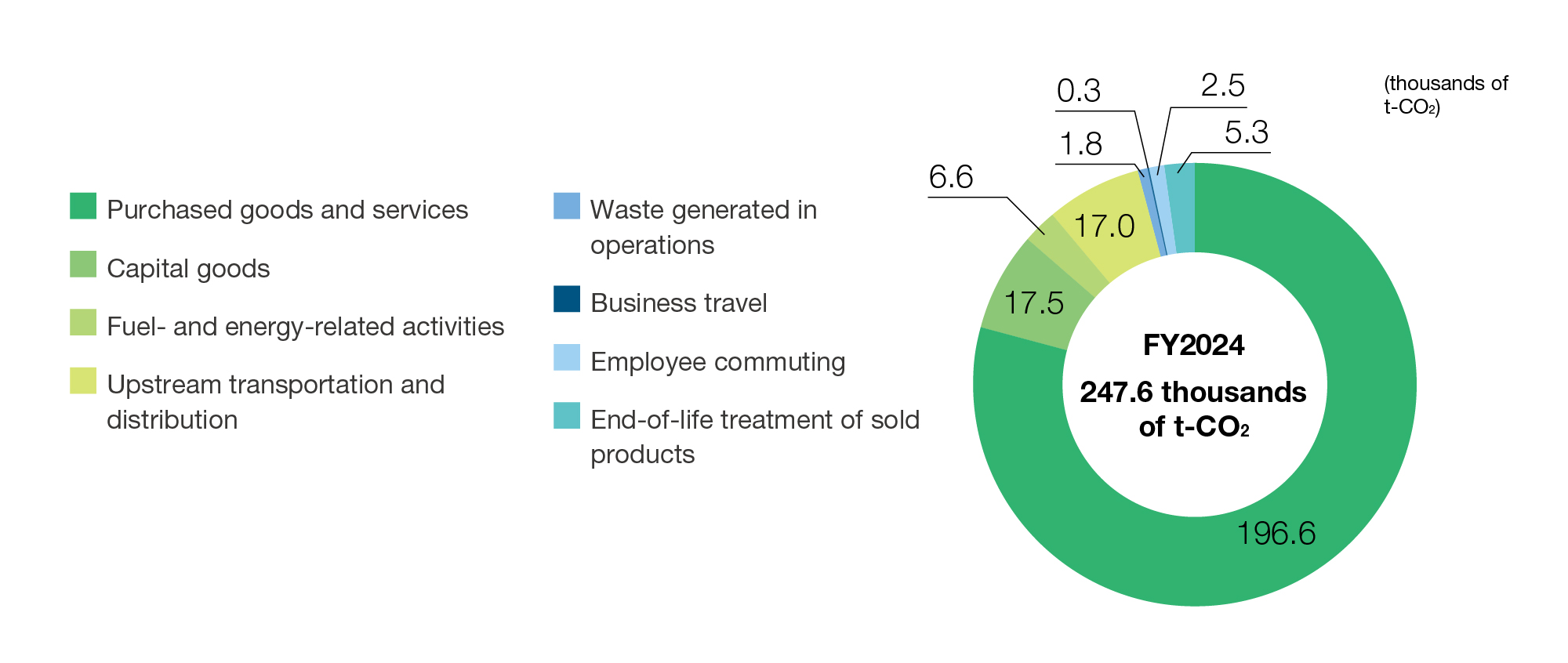
- *8Categories 8, 9, 10, 11, 13, 14, and 15 fall outside the scope of calculation as there are no corresponding activities.
Third-party Verification
Following fiscal 2023, the fiscal 2024 figures for all Scope 1, 2, and 3 emissions have been verified by a third-party organization*9 in accordance with international standards and guidelines, and the reliability and accuracy of the figures we report have been confirmed.
- *9Third-party verification by Socotec Certification Japan Co., Ltd.
Going forward, the Group will steadily promote reduction activities in each scope, while also continuing and expanding Scope 3 calculations and working to reduce emissions throughout the entire supply chain. Through these activities, we aim to achieve both business growth and a reduced environmental impact, thereby contributing to the realization of a sustainable society.
Governance
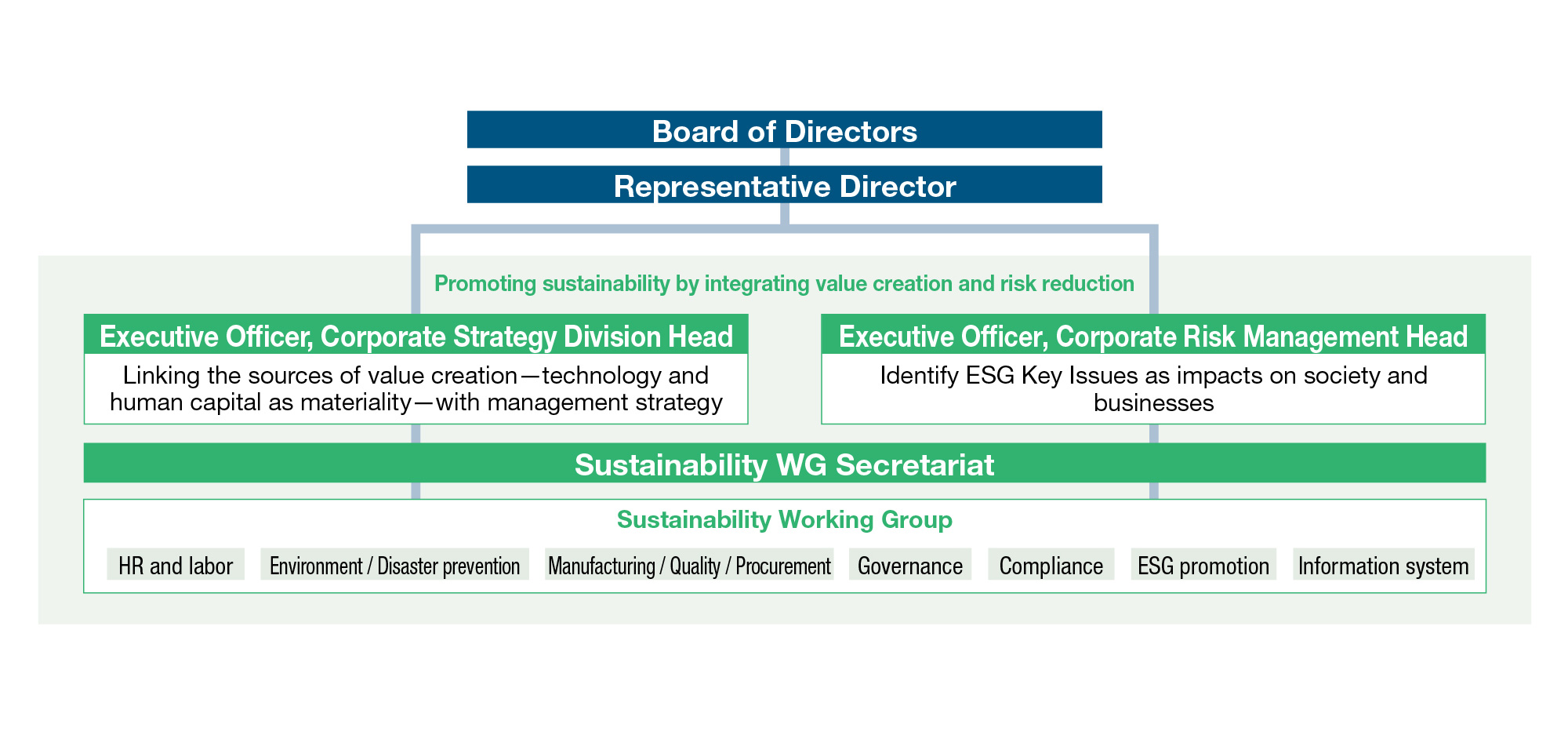
We have established a Sustainability Working Group, with the representative director and president holding ultimate authority, and relevant departments participating under the direction of the executive officer in charge of the Corporate Strategy Division and the executive officer in charge of Corporate Risk Management Head. The Group promotes activities geared toward the achievement of a sustainable society, including measures to address climate change. The Sustainability Working Group continuously monitors the CO2 emissions reduction targets set in the ESG Key Issues and progress toward achieving them, and reports to the Board of Directors and the Board of Executive Officers. This strengthens oversight and ensures that climate change responses are integrated into the formulation and execution of management and business strategies. Further, by undertaking initiatives from an inter-divisional perspective, we aim to enhance our activities and promote in-company awareness.
Risk Management
In accordance with internal rules and regulations on risk management, the Group has established a Risk Management Committee. Based on the supervision of the representative director, who is also the Chief Risk Management Officer, the executive officer in charge of Corporate Risk Management Head serves as the committee chair, and the organization responsible for climate change undertakes activities and reports as necessary. We position climate change as one of the fundamental management risks and the identified key issues are reported to the Board of Executive Officers, and the Board of Directors considers countermeasures as necessary.
Participating in the Japan Technological Research Association of Artificial Photosynthetic Chemical Process (ARPChem) contributing to the realization of carbon neutrality
The use of hydrogen is regarded as key to achieving carbon neutrality by 2050.
In fiscal 2025, the Ministry of the Environment launched a new Study Group on Artificial Photosynthesis with the aim of Accelerating Early Social Implementation, and nationwide efforts are underway. Dexerials has been participating in the second phase (2022–2031) of the Japan Technological Research Association of Artificial Photosynthetic Chemical Process (ARPChem), which aims to realize artificial photosynthesis technology capable of producing CO2-free low-cost green hydrogen. This initiative was launched as part of the Green Innovation (GI) Fund project launched by the Ministry of Economy, Trade and Industry and the New Energy and Industrial Technology Development Organization (NEDO).
Japan is a world leader in this technology field, having conducted the world’s first demonstration test of artificial photosynthesis. Companies and research institutes are developing technologies with an eye toward societal implementation in the areas of catalyst development, hydrogen separation membrane development, and safety verification.

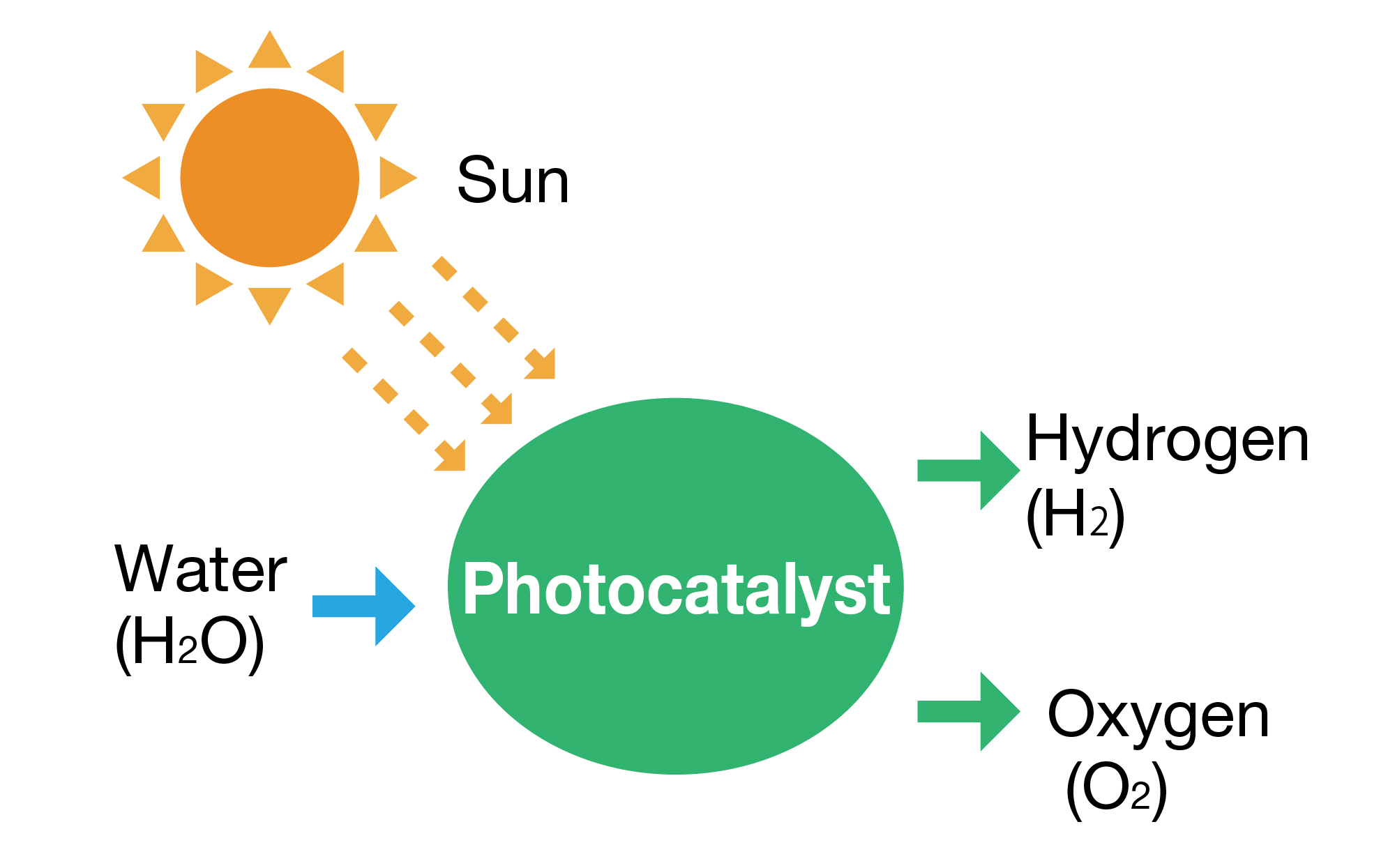
Overview of Artificial Photosynthesis Technology
Artificial photosynthesis technology utilizes sunlight and photocatalysts to split water, producing hydrogen and oxygen. The goal is to achieve an energy conversion efficiency of approximately 10% from sunlight.
The hydrogen produced can be reacted with CO₂ to produce chemical feedstocks, such as ethylene, thereby reducing CO₂ emissions.
Reducing GHG Emission Volumes: Dealing with Climate Change
Climate change on a global scale is thought to have been brought about by greenhouse gas emissions based on the use of fossil fuels, etc., and the emission of air polluting substances. Of these greenhouse gases, it is possible to reduce CO2 emissions through human intervention in the form of energy-saving activities. It is possible to reduce climate change by reducing emissions from machinery of fluorocarbon HFC (hydrofluorocarbon), which has a greenhouse effect of 100 to more than 10,000 times that of carbon dioxide even though it does not damage the ozone layer, and by switching to non-fluorocarbon/low-GWP (global warming potential).*10The Dexerials Group is responding to climate change as an important challenge, include taking energy-saving measures and reducing fluorocarbon emissions from machinery.
- *10GWP (global warming potential): A value that shows the relative effect on global warming of a unit amount of a specific substance emitted into the atmosphere, if a value of 1.0 is given to CO2.
Initiatives
Use of total heat exchangers for air-conditioning systems (Tochigi Technology Center)
Fluorocarbon emissions reduction countermeasure (all plants)
Reducing power consumption by introducing high energy-saving models (Dexerials (Suzhou) Co., Ltd)
Reducing power by using plug fan air conditioners (Kanuma Plant)
Reducing power by spraying water on air-cooled chillers (Kanuma Plant)
Reducing the drive power of cooling water pumps used in refrigerating machines (Kanuma Plant)
External Evaluation
In the system of classifying businesses based on periodic reporting in the Energy Conservation Law (presented in fiscal 2022) for businesses and factories from the Agency for Natural Resources and Energy, part of the Ministry of Economy, Trade and Industry, Dexerials was selected as a superior energy conservation business (S Class) running since the start of the system.