



About Our
Products
Biological Sensing│Case study of Reflective sensor
- SWIR optical sensor technology revolutionizes health management using wearable devices
- As health management (healthcare) using wearable devices becomes more widespread, the development of non-invasive technology that can measure blood components without needles is accelerating. In order to obtain biological information that was difficult to measure using conventional sensing methods that use visible light or infrared light, Dexerials has developed technology that combines reflective sensors with short-wavelength infrared light that has excellent biological penetration. We provide solutions that realize next-generation biological sensing.
View information about this product
Application
Non-invasive measurement of blood components
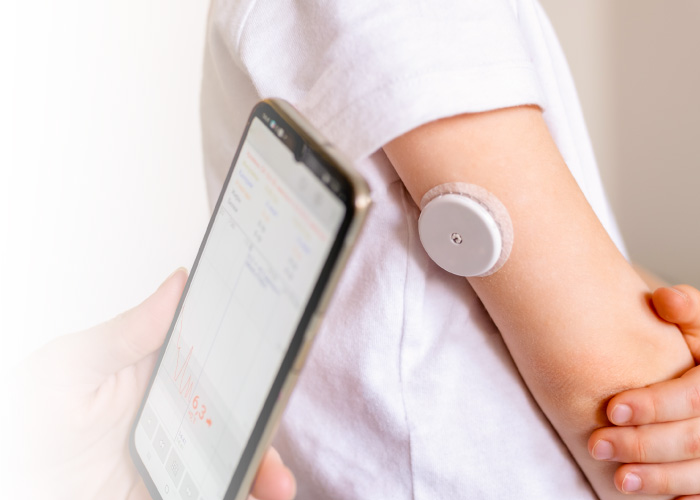
By shining short-wavelength infrared (SWIR) light onto the skin and analyzing the reflected light, it is possible to estimate blood glucose levels and blood oxygen levels without taking blood samples. This technology is expected to be used for blood glucose management in diabetic patients, vital sign monitoring, and early detection of skin cancer.
Miniaturization that enables incorporation into wearable devices
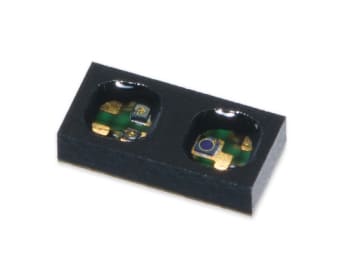
Our SWIR type reflective sensor integrates an LED that emits short-wavelength infrared light and a light-receiving element that receives reflected light into a small package, making it possible to incorporate it into small devices with space constraints such as smartwatches.
Product characteristics
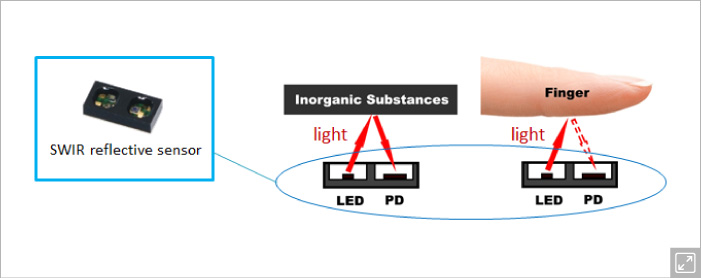
Utilizing specific wavelengths in the SWIR (short wavelength infrared) region for sensing
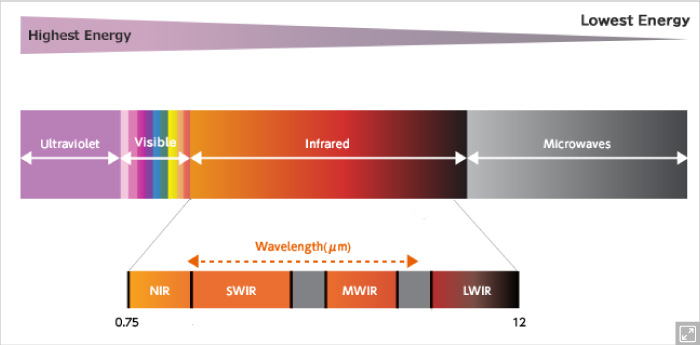
SWIR is a type of infrared light with a short wavelength (900-1700nm), and can detect biological components such as glucose (1600nm) and oxygenated hemoglobin (660nm), which have a unique absorption spectrum for SWIR. This makes it possible for Dexerials' SWIR-type reflective sensors to non-invasively measure and analyze components contained in blood.
Supports various wavelengths to suit the biomarker you want to detect
SWIR type reflective sensors house an LED that emits SWIR light and a PD that captures the reflected light in a compact case, and are available in a variety of types to suit the components you want to detect. The dual element type is equipped with an LED with a wavelength of 1450 nm, allowing for highly accurate sensing of the water content in a substance. The triple element type is equipped with two wavelength LEDs, 810 nm and 1300 nm, allowing for sensing of hematocrit, which indicates the amount of red blood cells in the blood.
Product information
Optical Semiconductor